Ready.gov Extreme Heat guide in: English, Arabic (لعربية), Spanish, French, Kreyol, Japan (日本語), Korean (한국어), Russian (Pусский), Fillipino (Tagalog), Vietnamese (Tiếng Việt), and Chinese (简体中文), Hindu – Extreme Heat Guide
For the German speakers, refer to the following websites
Tipps für Menschen ab 65 und Angehörige,
Tipps gegen Hitze: Diese einfachen Maßnahmen helfen
For the Italian speakers, follow the instructions from the following websites
Proteggiamoci dal caldo: le 10 regole per un’estate in sicurezza
For the Polish speakers, go to these websites
Zasady bezpieczeństwa podczas upałów
Jakie środki ostrożności zachować podczas upałów?
For the Ukrainian Speakers, visit these websites
Як правильно охолоджуватися у спеку?
Як вберегтися від екстремальної спеки – поради ЦГЗ
For Bosnian/Croatian/Serbian speakers, go here
Preporuke za zaštitu od vrućina
Kako se zaštititi od velikih vrućina?
Preporuke za zaštitu od vrućine
Preporuke za zaštitu od vrućina
Greek speakers, visit these pages
For the Turkish citizens, go here
El Niño is a natural climate pattern where the surface waters of the central and eastern tropical Pacific Ocean become unusually warm, disrupting normal weather patterns around the world. It can shift rainfall, intensify heat in some regions, worsen droughts or floods, and often raises global average temperatures temporarily. El Niño may raise global heat risk, but dangerous heat is local. This guide helps you prepare before alerts arrive and act when they do.
Extreme Heat: 10-Minute Survival Guide
Extreme Heat: 10-Minute Survival Guide
Use this when a heatwave is coming, already here, or your home is getting dangerously hot.
Extreme heat can make people sick quickly, especially older adults, small children, pregnant people, people with chronic illness, outdoor workers, people living alone, and people in homes that overheat. Heat can also worsen heart, lung, kidney, mental health, and other medical conditions.
0–1 minutes: Check if this is an emergency
Call your local emergency number immediately if someone has signs of heatstroke:
Possible heatstroke signs
- Confusion, strange behavior, fainting, collapse, seizure
- Very hot body
- Loss of consciousness
- Severe weakness or inability to sit/stand normally
- Symptoms that are rapidly getting worse
While waiting for help: move the person to shade or a cooler place, remove extra clothing, and cool them fast with cold water, wet cloths, ice packs, fan air, or a cool bath if safe. Do not delay emergency care. CDC/NIOSH guidance treats heatstroke as an emergency requiring immediate medical help and rapid cooling.
1–3 minutes: Move to the coolest place
Go to the coolest room or area you can reach.
Good options:
- A basement or lower floor
- A shaded room
- A room with closed blinds/curtains
- A public cooling place if your home is too hot: library, mall, community center, place of worship, train station, or official cooling center
If your home is cooler than outside, protect the cool air. Close windows, curtains, blinds, and doors during the hottest part of the day. Ventilate late at night or early morning when outside air is cooler. WHO recommends keeping living spaces cool and paying special attention to indoor temperature for older adults, infants, and chronically ill people.
3–5 minutes: Cool your body
Cooling your body matters more than “feeling tough.”
Do this:
- Drink water.
- Take a cool shower or bath.
- Put cool water on your skin or clothes.
- Use a wet cloth on your neck, wrists, face, armpits, or groin.
- Put your feet in cool water.
- Wear loose, light clothing.
- Avoid heavy meals and intense activity.
WHO recommends light clothing, cool showers or baths, wet cloths or spray, and regular drinking during heat.
5–7 minutes: Hydrate intelligently
Drink water regularly. Do not wait until you feel very thirsty.
A simple rule: small amounts often.
If you are sweating a lot, eating normally helps replace salts. If you are doing hard work, stuck outside, or sweating heavily for hours, consider electrolytes or salty food.
Avoid:
- Alcohol
- Too much caffeine
- Heavy exercise
- “I’ll just push through it” thinking
Important: if a doctor has told you to limit fluids because of heart, kidney, or other medical conditions, follow medical advice.
7–9 minutes: Check on one vulnerable person
Heat kills many people quietly because they are alone.
Check on:
- Older relatives or neighbors
- People living alone
- People with chronic illness
- Infants and small children
- Pregnant people
- People without AC
- People in top-floor apartments
- Outdoor workers
- Homeless people
Send a message or call:
“It’s dangerously hot today. Are you drinking water? Is your room cool? Do you need help getting somewhere cooler?”
WHO specifically recommends regularly checking vulnerable people, especially people over 65, people with heart, lung, or kidney conditions, people with disabilities, and people living alone.
9–10 minutes: Make the next few hours safer
Before you relax, do these:
- Fill water bottles.
- Put one bottle in the freezer if you can.
- Charge your phone.
- Check the weather alert for your area.
- Prepare a cool sleeping place.
- Close blinds/curtains before the sun hits the room.
- Avoid cooking with the oven.
- Move important tasks to early morning or late evening.
- Keep pets cool and supplied with water.
- Know where you would go if your home becomes unsafe.
Heat exhaustion warning signs
Heat exhaustion can become dangerous. Take it seriously.
Signs may include:
- Heavy sweating
- Weakness or tiredness
- Dizziness
- Headache
- Nausea or vomiting
- Muscle cramps
- Pale, cool, clammy skin
- Fainting
Move to a cooler place, loosen clothing, cool the body, and sip water. Seek medical help if symptoms worsen, vomiting occurs, confusion appears, or the person does not improve. The U.S. National Weather Service lists these as common heat exhaustion signs and advises cooling, water, and medical attention if symptoms worsen or last longer than an hour.
The core rule
Do not wait until heat feels unbearable. Act early.
By the time someone is confused, fainting, or unable to cool down, it may already be an emergency.
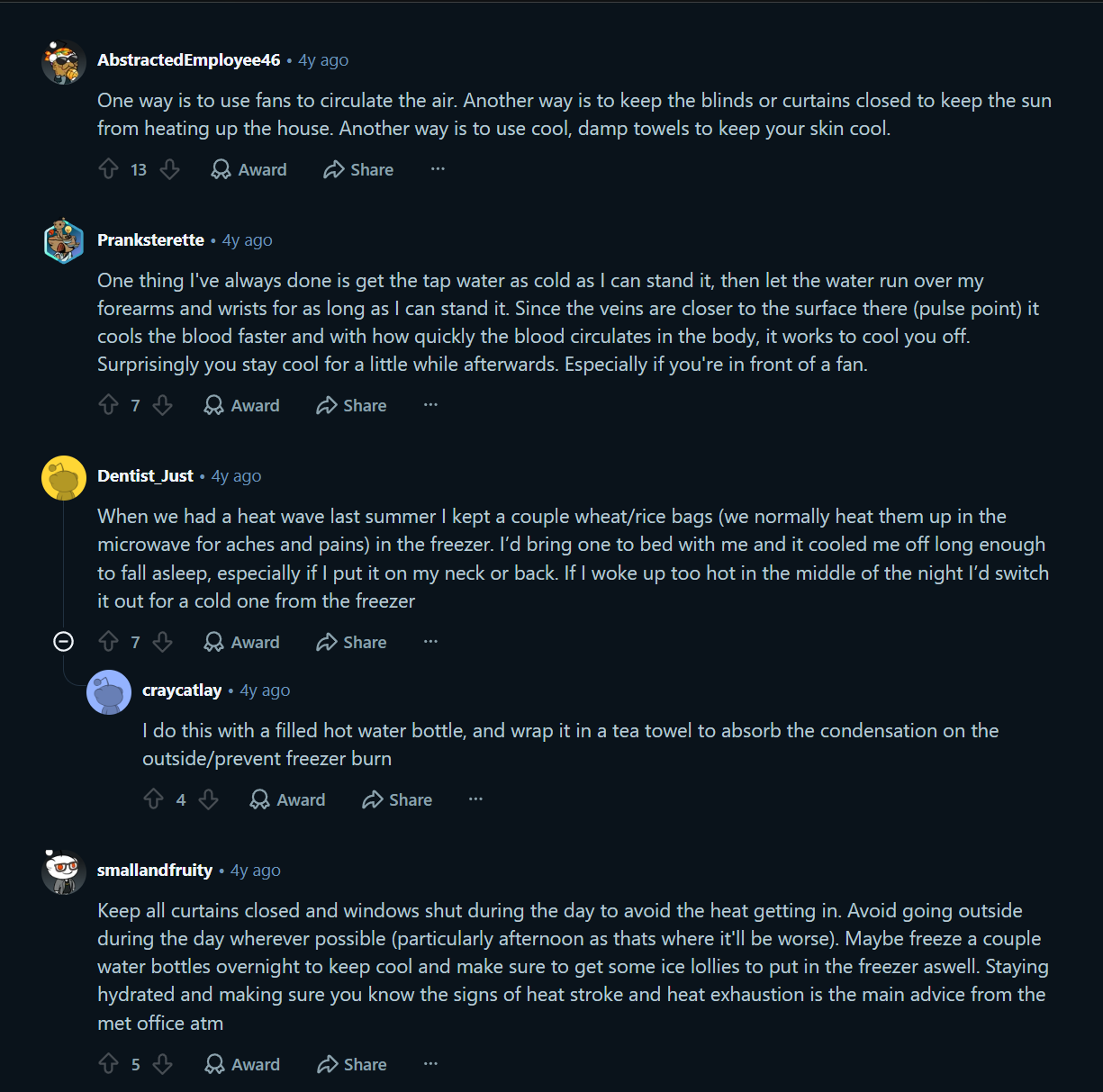
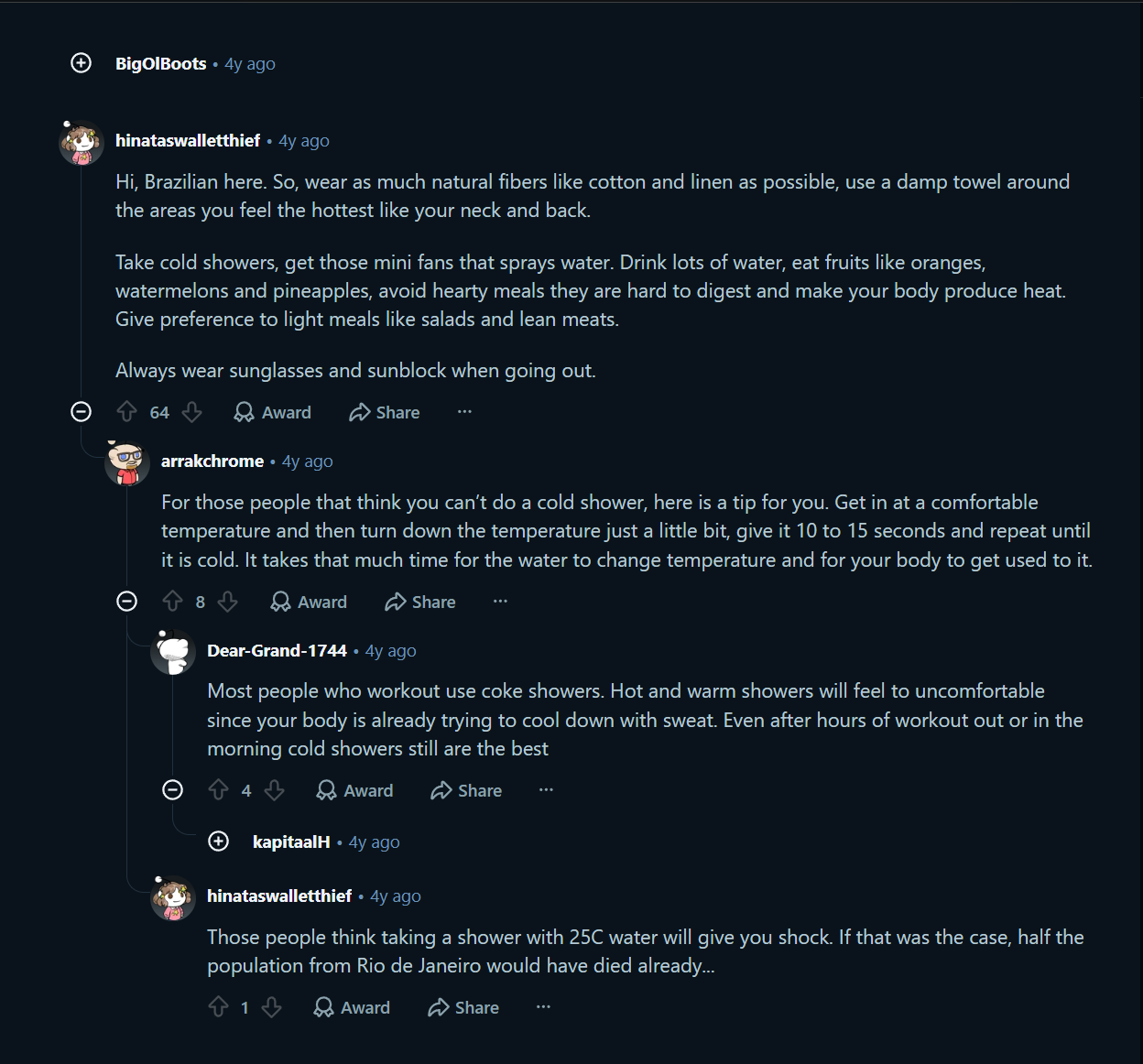
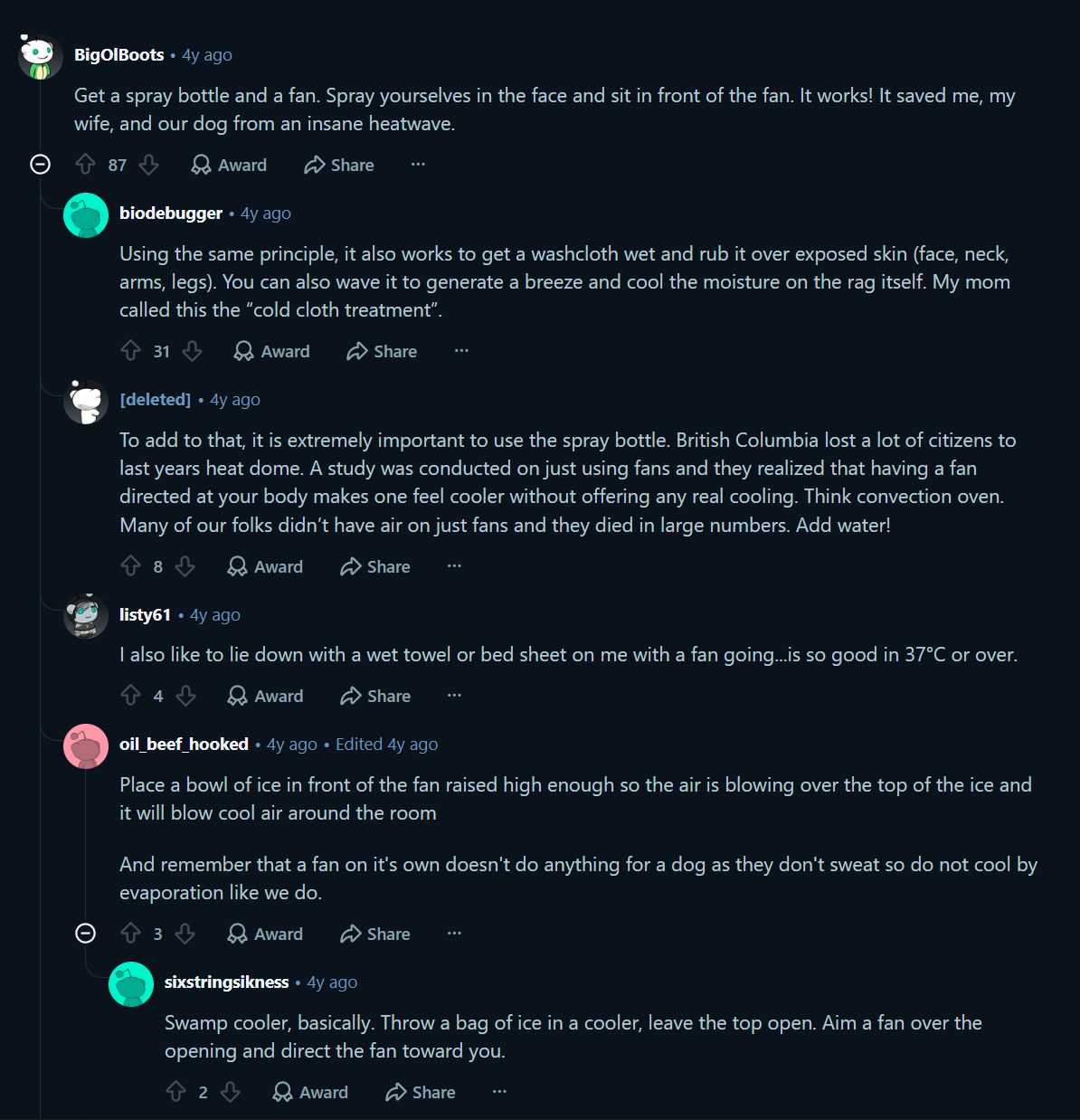
Related Reddit Thread